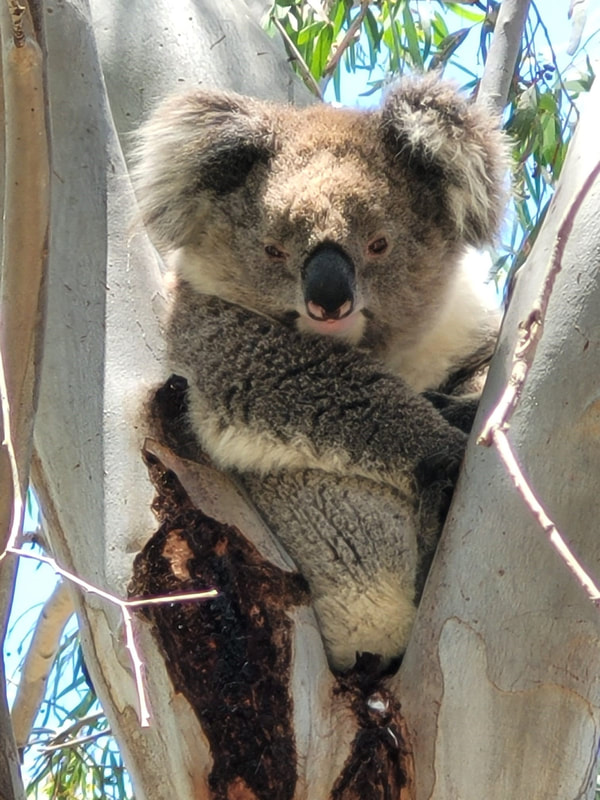
Koalas and Heat - How you can help
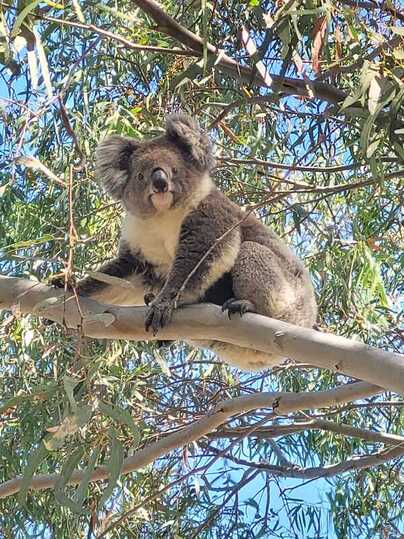
In the summer, it is not uncommon to find koalas struggling with the hot days we encounter. To help you have a greater understanding of what you may see with a koala on a hot day and ways to help, read on.
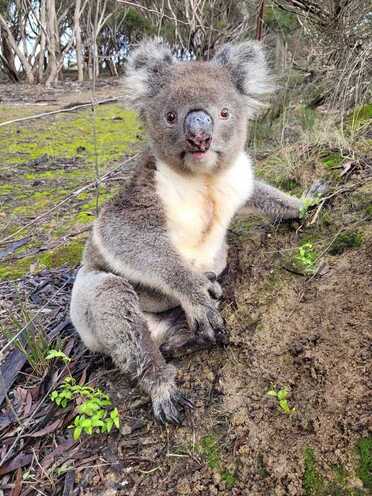
Koala on the Ground
Koalas do come down from trees to find water, especially after periods of long dry days when the moisture content in the leaf may be inadequate and they need to rehydrate.
This is when providing water to a koala is recommended but only in a bowl. Whilst you may have seen images of koalas eagerly lapping from an upturned water bottle, this does pose a risk to the koala as water may enter their airways, leading to further complications. That is why a bowl on the ground is the best way to help a koala (and any other wildlife in the vicinity).
Whilst the koala is on the ground drinking, please do not approach the koala, do not try to pat it or interact with it. Keep dogs and children away so the koala can drink in peace.
The koala should return to a tree on its own after drinking, but should it remain on the ground or continue to drink for a long period, we recommend you contact a koala rescue/wildlife rescuer group in your area, so they can make an assessment of the koala. It is helpful if you provide the exact location where the koala is to ensure the koala gets attended to as soon as possible.
Koalas do come down from trees to find water, especially after periods of long dry days when the moisture content in the leaf may be inadequate and they need to rehydrate.
This is when providing water to a koala is recommended but only in a bowl. Whilst you may have seen images of koalas eagerly lapping from an upturned water bottle, this does pose a risk to the koala as water may enter their airways, leading to further complications. That is why a bowl on the ground is the best way to help a koala (and any other wildlife in the vicinity).
Whilst the koala is on the ground drinking, please do not approach the koala, do not try to pat it or interact with it. Keep dogs and children away so the koala can drink in peace.
The koala should return to a tree on its own after drinking, but should it remain on the ground or continue to drink for a long period, we recommend you contact a koala rescue/wildlife rescuer group in your area, so they can make an assessment of the koala. It is helpful if you provide the exact location where the koala is to ensure the koala gets attended to as soon as possible.
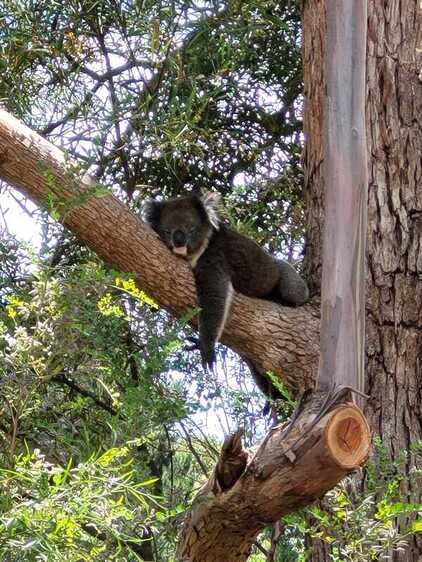
Tree Hugging Koala
A way to cope with very hot conditions is for a koala to hug a tree. A tree trunk is cooler than the ambient temperature, and by a koala hugging the tree with all limbs wrapped around it, there is a significant cooling effect for the koalas.
This is normal behaviour for a koala, and at this stage, no intervention would be necessary. But a bowl of water at the base of the tree would be a welcome addition for the koala if needed.
Tree Hugging Koala
A way to cope with very hot conditions is for a koala to hug a tree. A tree trunk is cooler than the ambient temperature, and by a koala hugging the tree with all limbs wrapped around it, there is a significant cooling effect for the koalas.
This is normal behaviour for a koala, and at this stage, no intervention would be necessary. But a bowl of water at the base of the tree would be a welcome addition for the koala if needed.
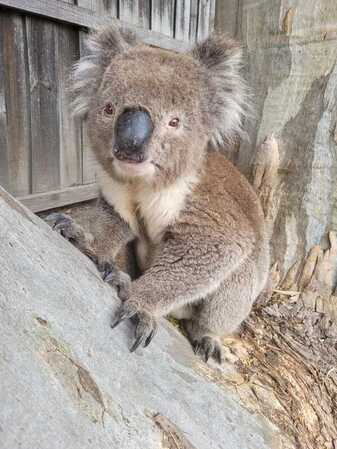
How to help
As mentioned above, on a hot day the best way to help koalas and our wildlife is by placing bowls of water out, keeping them topped up and clean, and making sure the animals can come down to drink without any intervention.
If you have a swimming pool, and koalas are nearby, leave a flotation device (it could be a pool noodle, an empty large plastic container) attached to a thick, secured rope so should a koala fall in, they have something to hang onto and clamber out. Koalas will drown in pools unless they have a means to get out.
If the koala is hugging a tree trunk down low, you can lightly mist the trunk and foliage (above the koala) so the water will slowly trickle down the trunk. We don't recommend misting the koala, unless instructed by a koala rescuer to do so.
When to call for help
If the koala does not climb back up the tree, and remains on the ground, please call your wildlife organisation in your area.
Do not approach the koala, attempt to capture it or encourage it to climb a tree.
If you do have concerns about any koala at any time or any season, please call a koala rescue organisation (or wildlife rescue group) in your area.
As mentioned above, on a hot day the best way to help koalas and our wildlife is by placing bowls of water out, keeping them topped up and clean, and making sure the animals can come down to drink without any intervention.
If you have a swimming pool, and koalas are nearby, leave a flotation device (it could be a pool noodle, an empty large plastic container) attached to a thick, secured rope so should a koala fall in, they have something to hang onto and clamber out. Koalas will drown in pools unless they have a means to get out.
If the koala is hugging a tree trunk down low, you can lightly mist the trunk and foliage (above the koala) so the water will slowly trickle down the trunk. We don't recommend misting the koala, unless instructed by a koala rescuer to do so.
When to call for help
If the koala does not climb back up the tree, and remains on the ground, please call your wildlife organisation in your area.
Do not approach the koala, attempt to capture it or encourage it to climb a tree.
If you do have concerns about any koala at any time or any season, please call a koala rescue organisation (or wildlife rescue group) in your area.